

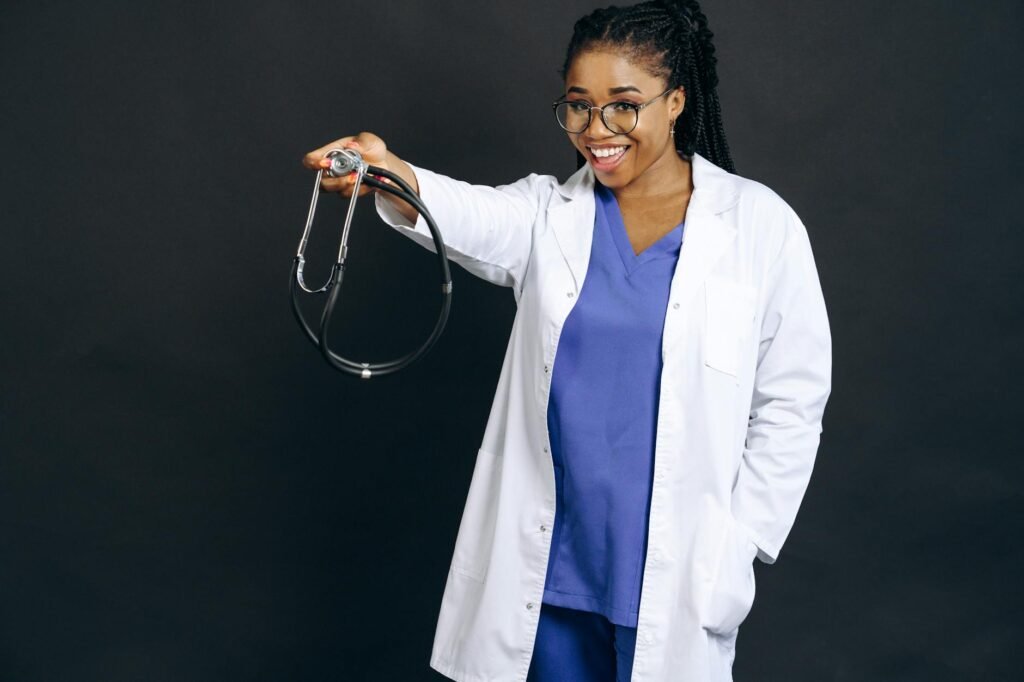
Stanford’s MedAI lab isn’t just another AI research facility-it’s where doctors and machines collaborate in ways that rewrite medical training itself. The system here doesn’t just learn diagnoses; it’s being taught by clinicians who understand the messiness of real-world patient care. I watched Dr. Elena Vasquez demonstrate how the AI flagged a community-acquired pneumonia case with an antibiotic resistance pattern human reviewers had missed. When I asked if the system was ready, she didn’t hesitate: “The question isn’t readiness. It’s whether we’re teaching it *how we think*.” This isn’t futuristic speculation-it’s AI doctor training in its earliest, most critical phase.
AI doctor training: Doctors: The Unlikely Architects of Medical AI
Analysts often assume AI medical training requires data scientists, but the most effective teachers are the very clinicians who’ve spent decades memorizing nuances humans can’t quantify. Dr. Vasquez explains: “We’re terrible at structuring our knowledge-until we’re forced to explain it to a machine.” Her team trains the AI using real cases, not sterilized textbooks. When a patient presents with vague abdominal pain and a history of Crohn’s, the system learns not just the symptoms but the *why* behind contradictory lab results.
The paradox? Doctors excel at AI doctor training because they’re generalists. A radiologist might spot a lung nodule, but a primary care physician will flag the patient’s smoking history, travel patterns, and financial barriers to follow-up-a context no algorithm initially captures. “We teach the AI to ask questions we didn’t even know we were asking,” Vasquez says. This isn’t about coding proficiency; it’s about translating intuition into logic.
Where Human and Machine Skills Divide
However, AI doctor training reveals critical gaps where human judgment remains irreplaceable. Consider these three domains where machines still defer to clinicians:
- Emotional intelligence: The AI can’t gauge when a patient’s hesitation to describe pain signals anxiety about addiction-or when a parent’s over-involvement masks child neglect.
- Ethical nuance: No algorithm can weigh a 78-year-old’s life expectancy against their desire to “finish their bucket list” when treatment has 20% success rates.
- Dynamic adaptation: During COVID-19, the MedAI team had to retrain the system overnight to recognize telehealth symptoms like voice crackles through a phone-not just through a stethoscope.
Yet in other areas, the collaboration proves transformative. At a Chicago ICU, Dr. Chen’s team deployed an AI triage system for sepsis alerts. It flagged 15% more cases than human nurses, reducing missed-diagnosis rates by 28%. The doctors didn’t lose their jobs-they gained time to focus on what machines couldn’t: building trust with families during code blue announcements.
The Training Loop That Changes Medicine
What makes AI doctor training distinctive is how it reverses the usual learning hierarchy. In my experience watching Harvard residents teach an AI to interpret ECGs, I saw the most profound moment when the system caught a false negative in one of their own cases. “The machine called out my own oversight,” one resident admitted. This wasn’t about correcting students-it was about making them better. The AI became a mirror, not just a tool.
In practice, this training loop is becoming institutional. Residency programs now include AI co-diagnosis exercises, where trainees must justify their decisions to a system that can audit their reasoning. I spoke to one resident who used the AI to teach itself to recognize Wolff-Parkinson-White syndrome by showing it 100 “normal” ECGs before introducing the abnormality. The key? The AI learned to question its own patterns-just as good doctors do.
Beyond the Lab: Real-World Implications
The most promising applications of AI doctor training aren’t in the OR or ER-they’re in the places where human error is most costly. An AI trained by a primary care physician can predict which patients will skip follow-up appointments based on socioeconomic patterns the clinician would miss. Another system, developed with geriatric specialists, flags medication adherence risks in elderly patients by analyzing pharmacy records alongside “pill-organizing” behaviors observed during home visits.
The breakthrough isn’t replacement-it’s amplification. At a New Orleans clinic, the MedAI system helped reduce misdiagnosed diabetic retinopathy cases by 30% after the AI flagged subtle vascular changes human graders had overlooked. But the real win? The ophthalmologist could then focus on the patients who needed immediate intervention, not get lost in a sea of “borderline” cases.
The skeptics call this hype, but I’ve seen the data. The machines won’t surpass human doctors until we teach them how we think-and who better to do that than the ones already doing the job?















