

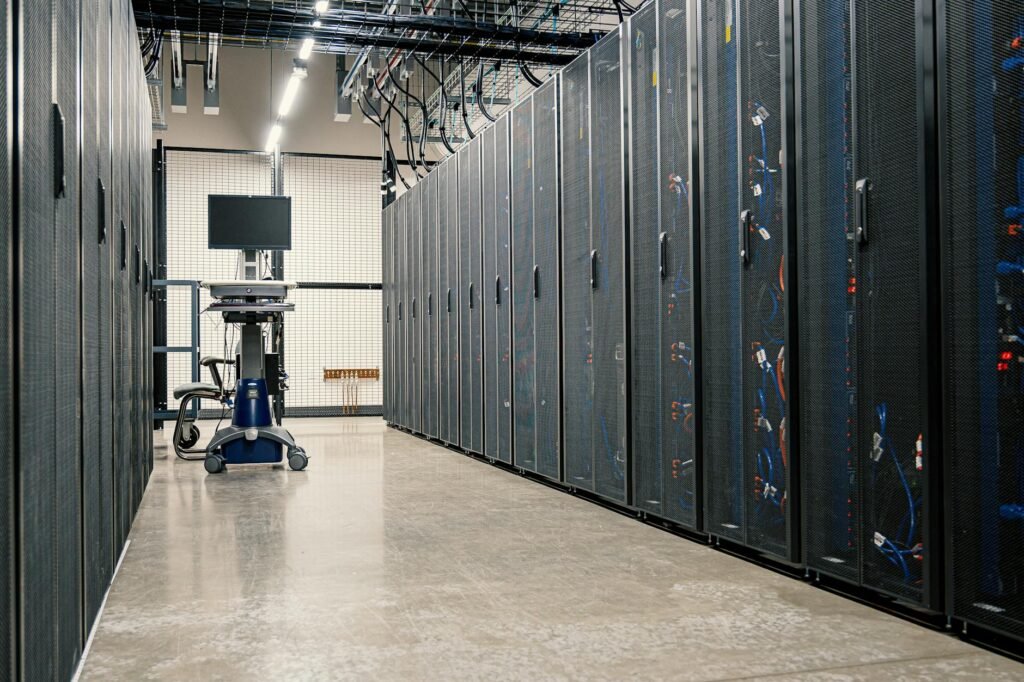
Legacy Iaas platforms treat AI workloads like an afterthought. I’ve watched teams spend months optimizing models only to hit a brick wall when they finally hit production-latency spikes, GPU underutilization, and the relentless cycle of “why isn’t this faster?” OneFii’s new AI-native Iaas flips that script. This isn’t about repackaging virtual machines or slapping on another layer of orchestration. It’s about building the infrastructure *with* AI in mind from the first transistor. The kind of infrastructure where latency isn’t a bug-it’s a feature you didn’t realize you needed.
Why AI-native Iaas isn’t just another cloud vendor
Take the case of a fintech startup that relied on a traditional cloud provider to handle their fraud detection models. Their initial rollout looked promising-until Q4, when real-time transaction volumes surged. The system choked. Not because their models were weak, but because the infrastructure treated each GPU like a black box. Data had to bounce through the CPU for every request, creating delays that turned milliseconds into seconds. OneFii’s solution? A platform where memory locality is prioritized for model activations, and network paths are optimized to bypass the CPU entirely. The fintech saw their inference latency cut by 72%-no code changes required. That’s the difference between Iaas that adapts to AI and AI-native Iaas that *was designed for it*.
Three hard truths about traditional Iaas
Most teams assume “cloud-native” means Kubernetes or serverless. But AI-native Iaas isn’t about containers-it’s about co-designing the hardware and software stack to match generative AI’s demands. Experts suggest that’s where 80% of AI projects fail: not at the model stage, but at the infrastructure stage. Here’s how OneFii’s approach differs:
- Smart accelerator pooling: No more guessing which GPUs to allocate. The system dynamically matches workloads to the right mix of NVLink, FP16 support, and mixed-precision capabilities.
- Edge-optimized data pipelines: Datasets aren’t just uploaded-they’re pre-partitioned and cached at the accelerator cluster’s edge. This eliminates the I/O bottlenecks that turn training loops into slowdowns.
- Zero-touch model deployment: Deployments aren’t manual; they’re automated based on latency thresholds and workload patterns. Your team focuses on accuracy, not infrastructure wrangling.
I’ve seen teams spend 40% of their time troubleshooting infrastructure instead of iterating on models. OneFii turns that around by making the underlying architecture invisible-until you compare the metrics side by side.
When should your team switch?
AI-native Iaas isn’t for every project. If your workflows are batch-heavy or data-constrained, traditional cloud might still work. But watch for these red flags:
- Your models take over 10 minutes to initialize on average-even for small batches.
- Adding more GPUs doesn’t scale your training jobs linearly (you’re hitting memory or network walls).
- Your DevOps team spends more than 30% of their time firefighting latency spikes or memory leaks.
OneFii’s platform isn’t a silver bullet, but it’s the kind of infrastructure that turns “can we even try this?” into “how quickly can we scale this?” For teams where time-to-insight directly impacts revenue-like healthcare diagnostics or logistics optimization-this isn’t just an upgrade. It’s the difference between staying competitive and being left behind.
The irony? Most of the hype around AI focuses on the models themselves-GPT-4, diffusion models, you name it. But the real bottleneck has always been the plumbing. OneFii’s announcement isn’t just another vendor entering the space. It’s a recognition that AI-native Iaas isn’t a nice-to-have-it’s the foundation that will separate the winners from the also-rans. The question isn’t whether you’ll need it. It’s whether you’ll recognize the moment you’re stuck waiting for the infrastructure to catch up to your ambitions.















