

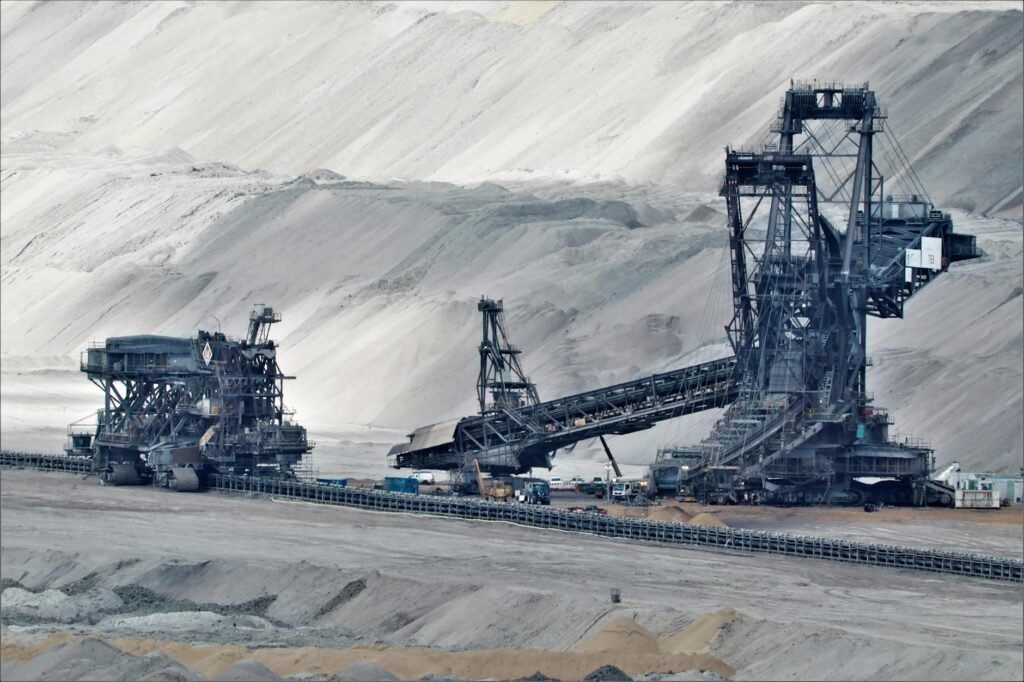
I was in the control room of a Pilbara iron-ore mine last year, watching a single operator monitor a fleet of autonomous haulage trucks through a digital twin simulation-no hard hats required. The screens flickered with live data streams: real-time ore-grade predictions from AI, weather models adjusting conveyor belt speeds, and a drone feed showing tailings dam stability. This isn’t the mining I grew up hearing about. It’s a future mining career where 60% of decision-making happens in software, not on-site. And yet, when I mention this shift to students or career changers, I often hear the same question: *”But how do I even get in?”* The answer isn’t what you’d expect.
future mining career: The tech revolution no one’s talking about
Mining’s transformation started long before anyone called it a “tech revolution.” Practitioners in Chile’s Escondida copper mine were already using digital twins to predict equipment failures by 2015-five years before most industry reports acknowledged the trend. Meanwhile, in Northern Ontario, a small team at Vale’s Creighton mine proved that AI-driven blast optimization could reduce over-break by 35% while cutting diesel consumption. These aren’t isolated cases; they’re proof that the most competitive future mining careers aren’t just about holding a shovel (metaphorical or otherwise). They’re about understanding how to bridge legacy systems with cutting-edge analytics.
Here’s the catch: most career advice for mining still focuses on geology degrees or trade school certifications. But the reality is that future mining careers now require skills that overlap with robotics, cybersecurity, and even urban planning. A data scientist I know transitioned from finance to mining by teaching operators how to interpret sensor data from underground pressure monitoring systems. The key wasn’t his geology background-it was his ability to translate complex statistical models into actionable reports for engineers who’d never opened a Python script.
What you actually need to know
The most surprising part of this shift? Many of the highest-demand roles don’t require a mining-specific education. In practice, practitioners with transferable skills dominate. Here’s where opportunities exist today:
- Tech integrators: Specialists who configure mine-to-market software (like SAP or MineSight) to communicate with autonomous haulage systems. Many come from IT backgrounds.
- Environmental data engineers: Professionals who process satellite imagery and ground-penetrating radar to model mineral deposits while ensuring compliance with carbon-neutral mining protocols.
- Cyber-physical systems analysts: The “glue” between OT and IT teams, responsible for securing SCADA networks from ransomware while maintaining real-time production metrics.
- Behavioral safety trainers: Psychologists and occupational therapists who design programs to reduce human error in fully automated environments (yes, humans are still critical).
Most of these roles require certifications-not degrees. A short course in Python for automation (like Coursera’s “Python for Data Science”) can open doors faster than a mining engineering degree, particularly if you pair it with hands-on experience. I’ve seen entry-level roles filled by candidates who completed a 6-month apprenticeship in remote operations monitoring-no prior mining experience needed.
How to start without overcommitting
The biggest misconception about future mining careers is that you need to move to a remote site or spend years in an underground tunnel. Yet I’ve worked with professionals who’ve designed digital mine layouts from their home offices in Vancouver while their teams operated 6,000 miles away in Zambia. The industry’s need for remote monitoring specialists, sustainability auditors, and logistics coordinators means you can build a future mining career from anywhere with a stable internet connection.
Begin with these concrete steps:
- Audit your existing skills: Can you write? Your ability to document SOPs (Standard Operating Procedures) is valuable for technical writers in mining. Can you code? Even basic SQL or MATLAB skills help with data extraction from equipment sensors.
- Target micro-credentials: Platforms like Udacity offer courses in autonomous systems integration that take less than 3 months. Pair these with free resources from the Society for Mining, Metallurgy & Exploration’s webinars.
- Network like a practitioner: Join Discord groups for mining tech (like “Mining Automation Network”) or attend virtual events hosted by organizations like the Australian Mining Industry Social Media Network. Many companies scout talent through these channels.
- Apply for “soft” roles first: Positions like mine site coordinator or compliance officer often serve as gateways. Your technical skills will shine when you can explain how they apply to real-world challenges-like I did when I told a hiring manager about optimizing warehouse layouts to reduce downtime in my previous retail job.
The transition takes less time than most people expect. A friend of mine switched from oil and gas to mining by leveraging her process safety certification-a skill directly transferable to high-hazard mining environments. She started as a health/safety manager and is now leading a team of digital twin developers within two years.
The next decade of mining won’t be won by those who memorize rock formations or memorize equipment specs. It’ll belong to the people who see mining not as an industry, but as a platform for applying skills from unexpected places. Whether you’re curious about AI-powered mineral exploration or circular economy design, the entry points are wide open. Just don’t wait for permission. Start where you are-with the skills you have-and ask how they fit into the machines, data, and people that define future mining careers today.















