

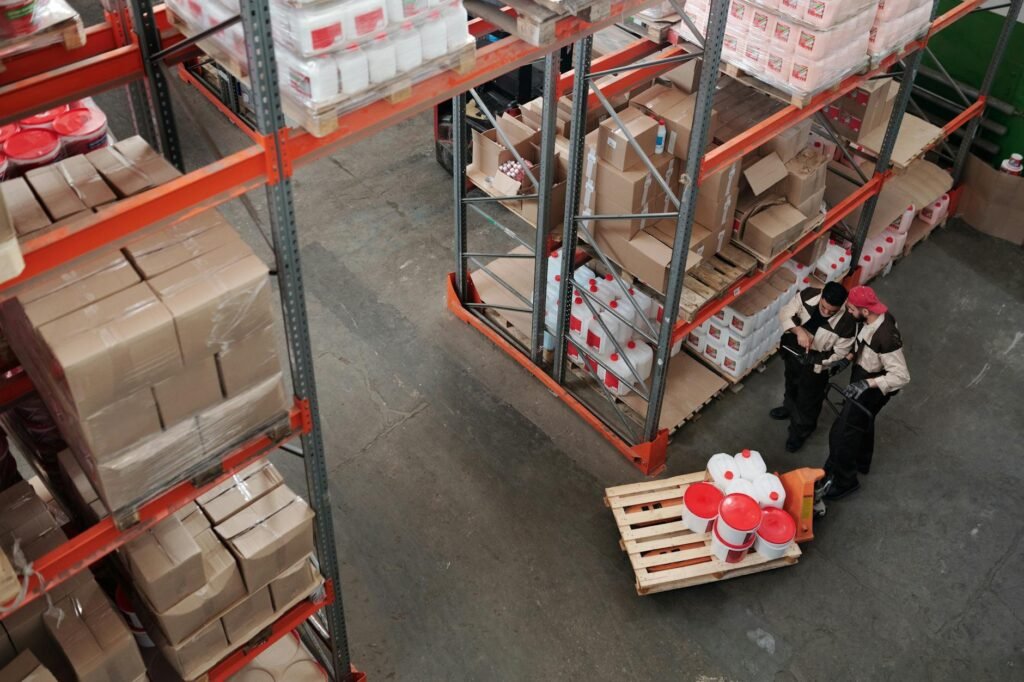
The last time I walked into a warehouse that wasn’t just storing goods but *reacting* to them was during a winter freeze in Texas. A single frozen pipeline halted 80% of our regional suppliers. What should’ve been a minor hiccup turned into a scramble when we realized our backup plans-once ironclad-hadn’t accounted for how quickly liquidity dried up across three states. That’s when I knew: supply-chains aren’t just about moving goods; they’re about how quickly you can pivot when the exchange between nodes breaks down. Yet most companies still treat them like fixed circuits, not living circuits that spark and short out under pressure.
supply-chain: The Supply Chain Myth: It’s Not About the Chain
Most executives still think of supply-chains as linear. You order. You receive. You repeat. But in reality, the real work happens in the exchange-the invisible moment between supplier and buyer, factory and distributor, where trust or mistrust determines survival. Consider how Tesla disrupted the auto industry. They didn’t just optimize their supply-chain; they *reimagined the exchange*. By cutting out middlemen for critical components like batteries, they turned suppliers from vendors into partners who had a vested interest in Tesla’s success. Studies indicate companies that treat supply-chains as rigid networks lose 12-18% of potential profit annually. The fix? Design exchanges where every stakeholder shares risk-and reward.
Where Rigidity Kills
I’ve seen it happen again and again: companies collapse under their own assumptions. Take a client in the apparel sector. They assumed their supply-chain was bulletproof because they’d mapped every stage digitally. Yet when a textile mill in Bangladesh shut down overnight due to a labor strike, their entire European distribution froze. The problem? They’d never tested how their exchange would handle a supplier’s sudden collapse. Most companies make three fatal mistakes:
- They treat suppliers as passive nodes, not active players who can detect threats before they materialize.
- They assume demand data is static, ignoring how quickly consumer behavior shifts during crises.
- They prioritize cost over collaboration, treating exchanges as transactions, not ecosystems.
The result? Delays turn into failures, and failures turn into reputational damage. The supply-chain isn’t the problem-it’s the rigidity of the exchange that surrounds it.
Building Resilient Exchanges
The future belongs to companies that treat their supply-chain as a dynamic exchange, not a static chain. Unilever’s African smallholder farmer network proves this. By using blockchain to track data in real-time, they turned supply-chain transparency into a collaborative feedback loop. When drought threatened one region, their exchange system rerouted supplies from overstocked areas *within 72 hours*-not because of perfect tech, but because every participant had visibility and accountability. Consider this: the most resilient exchanges don’t rely on perfect systems. They rely on systems where every participant *trusts* the system enough to act fast.
Here’s how to start small:
- Audit your blind spots: Map where your supply-chain’s “black swan” moments occur-usually at the edges, where information silos hide.
- Test like it’s game day: Simulate a 30% supply shock and watch who in your exchange reacts first. The laggards are your weak points.
- Reward transparency: Tie supplier incentives to data-sharing, not just cost-cutting. Trust isn’t free-but it’s cheaper than the alternative.
The Human Exchange
All the algorithms in the world won’t matter if your exchange feels like a factory floor, not a brainstorm. I visited a German automotive supplier where technicians, foremen, and data analysts shared a single whiteboard tracking production in real-time. One lunch break, a foreman spotted a bottleneck and manually rerouted parts-saving $200K in overtime costs. The exchange here wasn’t just about materials; it was about *people* interpreting local conditions faster than any system could. Yet most companies still treat their supply-chain workforce like they’re operating in a vacuum. The exchange requires both tech and culture-where every dockworker and CEO knows they’re part of a living system, not a linear one.
The old mantra of “supply-chain optimization” is dead. The future belongs to those who treat their network as an exchange-where every delay is a chance to collaborate, every miscommunication is a chance to course-correct, and every unexpected opportunity is met with rapid, collective response. That’s not logistics. That’s business.















