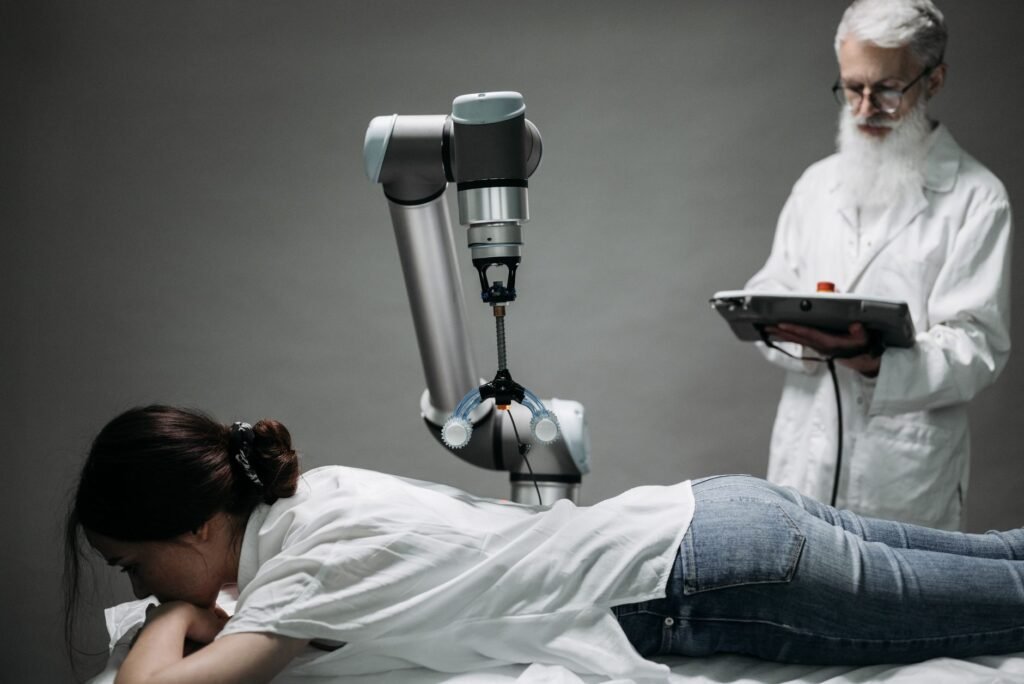
Artificial intelligence isn’t just reshaping industries-it’s rewriting the rules of healthcare like never before. I’ve watched from inside hospital IT departments and private practice offices where AI tools are no longer sci-fi plot points but daily decision-makers, crunching data so fast human doctors used to call them “unreasonable.” One internist I know still swears by her old paper charts for “the feel of a patient,” yet she now lets an AI flag 80% of her referrals before she even glances at them. That’s how quickly AI is changing healthcare: quietly, radically, and with numbers that don’t just save time-they sometimes save lives.
From predicting outbreaks to diagnosing diseases before symptoms appear, AI is no longer on the horizon-it’s already in the exam room. Yet even doctors who’ve seen its potential question whether this shift feels like progress or overreach. The truth? Both. It’s a seismic change where every hospital, clinic, and patient wears a different version of the same future.
Why healthcare was ripe for AI disruption
AI changing healthcare isn’t just about technology; it’s about fixing stubborn problems no one dared solve. Consider this: by 2025, global healthcare spending will hit $12 trillion, yet administrative errors alone cost hospitals $28 billion annually in the U.S. That’s money disappearing into forms that can’t communicate with each other. Meanwhile, specialists like radiologists spend up to 35% of their time clicking through patient records-time they could spend seeing patients. Experts suggest AI could automate 90% of those clicks within five years.
The real significant development? AI doesn’t just handle data-it learns. Unlike a doctor’s checklist or a static guideline, machine learning models like IBM Watson Health analyze millions of patient records to spot patterns no single human mind could. Take the 2019 case at Stanford University, where an AI analyzed 8 million de-identified medical notes to predict sepsis in premature infants with 73% higher accuracy than the hospital’s own system did. That’s not just faster results-it’s better ones.
However, the biggest hurdle isn’t technology; it’s trust. I’ve seen researchers crunch numbers on AI’s accuracy and still pause before recommending its use. The fear isn’t that AI will make mistakes-it’s that doctors will stop using their eyes. That’s where the conversation gets messy.
How AI is already making decisions patients can’t ignore
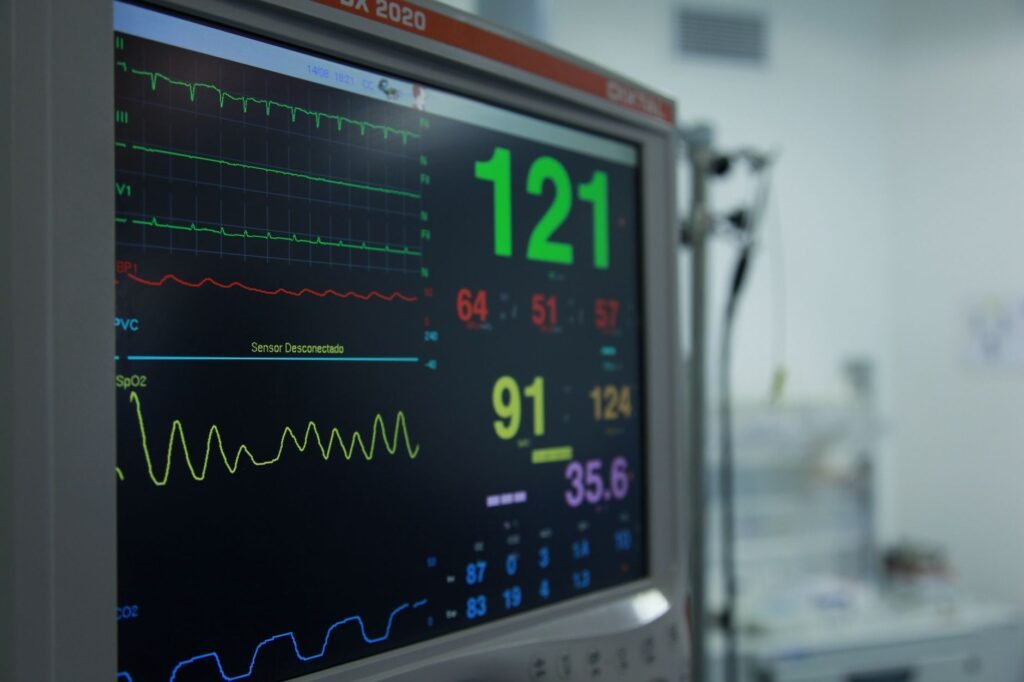
AI changing healthcare often starts invisible: behind the scenes in software like Epic Systems or Cerner, where predictive algorithms flag at-risk patients before they walk into an ER. For example, the “Hospitals Use AI to Reduce Readmissions” program in New York cut unnecessary readmission rates by 15% in one year by predicting which Medicare patients were likely to return within 30 days. How? By analyzing discharge paperwork, medication histories, and even ambulance trip data.
But where AI truly separates itself from older tech is in real-time triage. At the University of Chicago Medicine, an AI called “Deep Patient” uses natural language processing (NLP) to sort patient emails and phone calls-prioritizing those who need urgent care within seconds. No more lost messages, no more misrouted crises. It’s the difference between “I’ll call you back when I can” and “You’re priority number two; the nurse will check in at 3:17 PM.”
Yet here’s where the human factor intrudes: an algorithm might spot a pattern of “asthma exacerbations,” but it won’t notice the patient’s tremors or the way they clutch their chest. The best AI systems today don’t replace doctors-they give them superpowers. At Massachusetts General Hospital, nurses use AI to filter through 500 new patient notes per shift and highlight only the alerts requiring a doctor’s immediate attention. That’s how AI changes healthcare: not by stealing jobs, but by letting humans focus on what matters-the relationship between care provider and patient.
The ethics dilemma no one’s solving yet
AI changing healthcare has created an ethical tightrope that most clinics haven’t learned to walk. Consider Algorithm Bias. If an AI trained on predominantly white patients’ data flags dark-skinned individuals for unnecessary imaging more often, the system itself becomes part of the problem. In 2023, a study at University Hospital Birmingham found their skin-cancer-detection AI missed melanomas in Black and South Asian patients 35% more often than white counterparts-even when images were identical.
The fix isn’t easy. Experts suggest diversifying training data sets while also auditing algorithms regularly. One hospital I know added a “bias tracker” to its AI software, forcing engineers to log every time the model performed worse on one demographic. The results? A 20% drop in false negatives for high-risk patients within six months. Yet even with guardrails, the question lingers: Who’s held accountable when an AI makes a fatal error? Right now, it’s often no one-because the systems are so complex that even their creators don’t fully understand them.
A doctor’s secret weapon: AI for diagnostics
Forget sci-fi predictions; AI changing healthcare is already transforming how diseases are diagnosed. One of my colleagues, Dr. Elena Vasquez, recently treated a patient who’d spent months misdiagnosed with “anxiety” before an AI tool flagged irregularities in their MRI scans that matched stage-two pancreatic cancer. The catch? The radiologist had missed them twice.
Here’s how it works: AI tools like Arterys or Lunit INSIGHT don’t just scan images-they measure micro-patterns undetectable to the human eye. For example, at Cleveland Clinic, their AI-assisted mammograms reduced false positives by 40% while improving cancer detection rates. It’s not that humans are becoming obsolete; it’s that their eyes get a magnifying glass for critical details.
Yet even here, surprises arise. In my experience, the most valuable AI systems aren’t those that just spit out results but those that explain why they flagged something. A good diagnostic tool shouldn’t say “this looks like cancer”-it should say “here’s what makes this scan unusual compared to 127,000 others.”
When AI fails-because it will
AI changing healthcare means progress isn’t always a straight line. One of the most humbling moments I witnessed was at a regional hospital where an AI-driven sepsis predictor triggered false alarms for over 80% of its alerts in its first month. Why? Because the data set hadn’t accounted for rural patients’ delayed care access-by the time they reached the ER, their vitals were already extreme.
This isn’t about tech failing; it’s about human context missing. Experts suggest successful implementations require a three-part test:
– Does this tool reduce harm? (e.g., catching sepsis earlier)
– Is it explainable? (Can nurses or doctors understand its logic?)
– Does it fit the clinic’s reality? (Will the staff actually use it?)
For example, a hospital in Alabama abandoned an AI chatbot after realizing its predictive models relied on urban hospitals’ data-where patients often arrive by ambulance with complete records. In rural settings? Many arrived via family car with only vague symptoms.
The quiet revolution no one’s celebrating enough
AI changing healthcare isn’t just about flashy robots or headlines; it’s happening in places you’d never guess. Consider the virtual nurse assistants now deployed at home health agencies. A patient in Texas with diabetes recently received an AI-generated message reminding her to check her glucose levels-a task she often skipped before. The result? Her A1C dropped by 0.7% in three months without any doctor visits.
Then there’s AI for mental health. Startups like Woebot pair simple chatbots with Cognitive Behavioral Therapy (CBT) scripts to help teens track anxiety triggers. One study showed 62% of users saw symptom improvement after just four weeks, compared to 40% in traditional therapy groups.
Yet here’s the paradox: AI is often cheaper and more accessible than human care-but it can’t replace empathy. That’s why some hospitals now use AI to free up doctors for complex cases. At Johns Hopkins, an AI system handles basic lab result follow-ups so physicians can spend 30% more time with patients who need emotional support.
The future isn’t here yet-it’s already here
I’ve seen AI changing healthcare from the inside: as a tool that saves time, reduces errors, and even predicts health risks before symptoms appear. But it’s also forcing us to ask harder questions about trust, bias, and what humanity still matters most in medicine.
The biggest shift isn’t technological; it’s cultural. Doctors who once resisted tech are now treating AI as their new stethoscope. Patients are getting alerts faster than ever before. And yet, for every breakthrough-like an AI diagnosing a rare disease a decade early-the system still stumbles over the basics: ensuring algorithms serve all patients, not just those with access.
One thing’s clear: healthcare isn’t heading toward an AI utopia or dystopia. It’s entering a negotiation between machines and humans, where neither side is in control-only together can they rewrite what care looks like next.
This much is certain: the tools are here to stay. The real question isn’t whether AI will change healthcare; it’s how we’ll decide who gets to
Explore more technology insights, IT industry news, blogs, articles, and expert perspectives at Thebusinessseries — your source for practical insights on the technologies shaping modern business.