

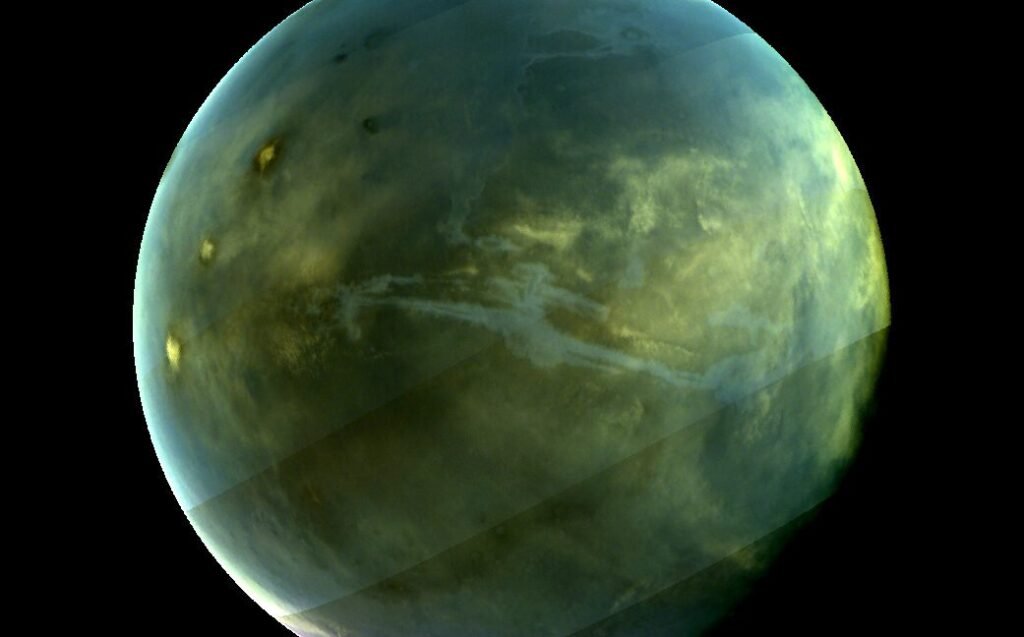
Nasa Just Lost Contact. NASA has lost contact with one of its three spacecraft orbiting Mars, the agency announced Tuesday.
ay. Meanwhile, a second Mars orbiter is perilously close to running out of fuel, and the third mission is running well past its warranty.
Ground teams last heard from the Mars Atmosphere and Volatile Evolution, or MAVEN, spacecraft on Saturday, December 6. “Telemetry from MAVEN had showed all subsystems working normally before it orbited behind the red planet,” NASA said in a short statement. “After the spacecraft emerged from behind Mars, NASA’s Deep Space Network did not observe a signal.”
NASA said mission controllers are “investigating the anomaly to address the situation. More information will be shared once it becomes available.”
The MAVEN spacecraft is just one of the three NASA missions currently orbiting Mars. The other two, the Mars Odyssey and the Mars Reconnaissance Orbiter, are also facing challenges. While MAVEN has lost contact, Odyssey is running low on fuel and expected to become the latest Mars orbiter to be lost as early as next year, if the fuel situation worsens.
The Mars Reconnaissance Orbiter, on the other hand, has been operational since 2006 and has far surpassed its intended lifespan of five years. Despite running past its warranty, the orbiter remains functional and continues to provide scientists with valuable data about Mars.
The loss of contact with MAVEN and the impending loss of Odyssey highlight the challenges and risks associated with deep space exploration. Despite these setbacks, NASA continues to push the boundaries of space research and continues to conduct groundbreaking missions.
With a growing number of nations and private companies joining the space race, the stakes are higher than ever. The consequences of losing valuable spacecraft like MAVEN and Odyssey could be costly and may set back the progress of future missions.
NASA remains tight-lipped about the potential causes of MAVEN’s signal loss despite efforts to communicate with the spacecraft. The agency has not ruled out the possibility of a hardware failure or a loss of power.
The MAVEN mission was originally designed to study the Martian atmosphere and how it interacts with the solar wind. If communication is re-established with MAVEN, scientists will be eager to receive more data and continue the mission.
While the future of the MAVEN mission remains uncertain, one thing is clear: the loss of contact with the Mars orbiter highlights the risks and challenges of deep space exploration. As NASA and other space agencies continue to push the frontiers of space research, they will have to be prepared for unexpected setbacks and adapt to new challenges as they arise.
NASA’s deep space missions continue to fascinate and captivate scientists and the general public alike. As we continue to explore and learn about our solar system, we must be prepared for unexpected challenges and setbacks.















