

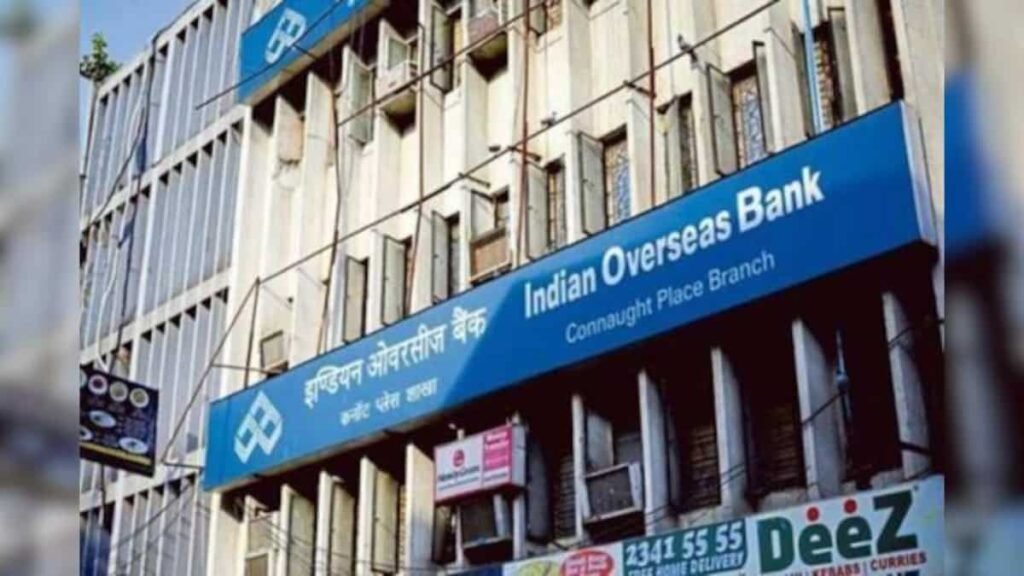
“IOB Share Sale Sees Indian Overseas Bank Shares Fall by 4% as Government Announces 3% Stake Sale via OFS” – A Move That Raises Several Questions about the Bank’s Future Prospects in the Indian Banking Sector.
Indian Overseas Bank or IOB shares fell by 4% as the government announced the sale of a 3% stake via Offer for Sale or OFS, a move that came at Rs 34 per share, a 7% discount to Tuesday’s close, raising several questions about the bank’s future prospects in the Indian banking sector.
According to reports, the government plans to sell up to 3% stake in IOB through the OFS route, which is set to open tomorrow for non-retail investors. Retail bids, however, will be accepted on Thursday, further complicating the already uncertain outlook for the bank’s stock.
IOB Share Sale: What’s at Stake
The government’s decision to sell a stake in IOB raises several questions about the bank’s future prospects in the Indian banking sector, as the sale is seen as a precursor to a potentially larger privatisations drive in the sector. The bank’s shares have been under pressure in recent months, with the government’s stake sale likely to further erode investor confidence in the bank.
Meanwhile, the sale price of Rs 34 per share is also a concern, as it represents a 7% discount to Tuesday’s close, making it a tough call for investors to participate in the stake sale. Additionally, the OFS route has been criticized for being opaque, with some investors questioning the fairness of the price discovery process.
Government Aims to Raise Funds
The government’s move to sell a stake in IOB is part of a broader effort to raise funds to meet the country’s fiscal deficit targets. The government has been under pressure to reduce its reliance on market borrowing and increase its revenue collection, which has led to frequent stake sales in state-owned enterprises.
Furthermore, the government’s stake sale in IOB is also seen as a test of its ability to manage the sale process and achieve its desired price, which will have a bearing on the overall market sentiment. As such, the sale is being closely watched by market participants and analysts, who will be keenly following the price discovery process and the demand for IOB shares.
Business strategies of the bank are also likely to be impacted by the government’s stake sale, as the move may signal a potential change in the bank’s ownership structure and management control. This could potentially lead to a change in the bank’s business priorities and growth strategies.
The sale of IOB shares is also being seen as a precursor to a potentially larger privatisations drive in the Indian banking sector. In 2020, the government announced plans to privatise two state-owned lenders, Bank of India and Central Bank of India, which are expected to be followed by similar moves for other state-owned lenders.
Research suggests that IOB is among the most troubled banks in the Indian banking sector, with significant bad loans and a deteriorating capital adequacy ratio. The government’s stake sale is seen as an effort to reduce the bank’s dependence on the government and increase its capital base, which will be crucial for the bank’s future growth and stability.
However, the government’s stake sale in IOB has not been without controversy. Some investors have questioned the fairness of the price discovery process, with concerns that the government is not getting a fair price for its stake in the bank. Additionally, the OFS route has been criticized for being opaque, further adding to investor concerns.
The government’s stake sale in IOB is expected to have a bearing on the overall market sentiment and the future prospects of the bank. As such, investors and analysts will be closely following the price discovery process and the demand for IOB shares in the coming days.
The sale of IOB shares is also expected to raise questions about the future of the bank’s business strategies, as the government’s stake sale may signal a potential change in the bank’s ownership structure and management control. This could potentially lead to a change in the bank’s business priorities and growth strategies, which will be crucial for its future growth and stability.
According to reports, the government plans to raise up to Rs 1,500 crore from the sale of its stake in IOB, which will be used to meet the country’s fiscal deficit targets. However, the government’s stake sale is seen as a test of its ability to manage the sale process and achieve its desired price, which will have a bearing on the overall market sentiment.
IOB Share Sale: Conclusion
The government’s stake sale in IOB is also seen as a test of its ability to manage the sale process and achieve its desired price, which will have a bearing on the overall market sentiment. As such, investors and analysts will be closely following the price discovery process and the demand for IOB shares in the coming days.
The government’s stake sale in IOB is also expected to raise questions about the future of the bank’s business strategies, as the government’s stake sale may signal a potential change in the bank’s ownership structure and management control.
Read original article for more information on IOB share sale and privatization of banks.















