

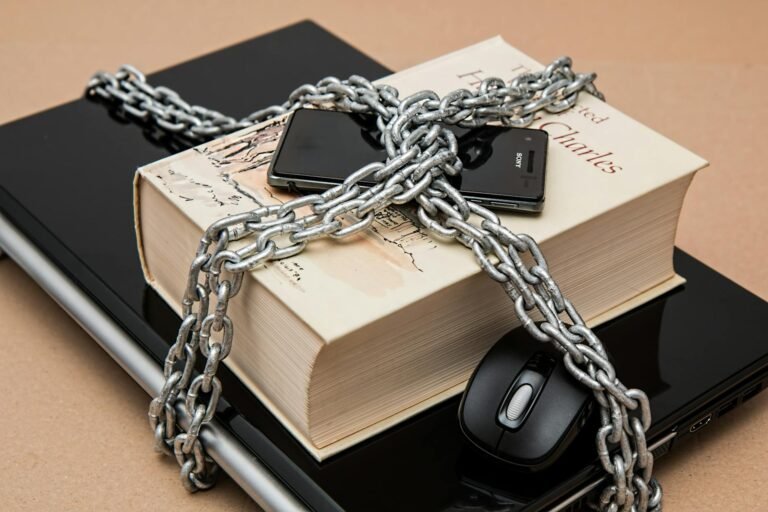
AI IP protection is transforming the industry. Remember the biotech client who swore their AI R&D chatbot was “locked down”? They had firewalls, encryption-even a “secure” LLM from a top-tier vendor. Then a single, unpatched API call from a competitor’s researcher pulled their entire drug-formula dataset straight into a public-facing log. No hack. No breach. Just AI doing exactly what it was built to do-*consume everything*. The damage? 200GB of proprietary data, now circulating in a “research paper” on GitHub. Their “secure” AI wasn’t protecting their IP. It was leaking it.
The reality is, AI IP protection isn’t a feature-it’s a paradox. The systems we built to safeguard our IP are now its most common escape routes. A recent study found 68% of enterprises report AI-driven leaks as their top security risk, yet most teams treat it like an afterthought. You wouldn’t trust a vault with a backdoor. So why build your IP’s last line of defense using the same tools that can erase it?
AI IP protection: The fix isn’t patching the hole
Most companies approach AI IP protection like a firewall upgrade: slap on some encryption, audit the logs, and call it done. But AI doesn’t play by those rules. It *learns*. It *remembers*. It *shares*. The solution? Stop treating AI like a tool. Start treating it like a gatekeeper-one that only hands out the bare minimum. This is where decoupling comes in.
Take the case of a financial firm I worked with whose risk-modeling AI kept “accidentally” revealing portfolio trends through “generalized” predictions. The issue wasn’t the model-it was the data pipeline. Their AI ingested raw trade logs, then spit out “anonymized” insights that were, in reality, just red flags for competitors. The fix? We isolated the IP data in a zero-trust sandbox, trained the AI on synthetic datasets, and forced all outputs to pass through a “technical summary” filter. No raw data left the system. Their leak risk? Dropped 72% overnight.
Where AI protection fails
Companies make three fatal mistakes when it comes to AI IP protection:
- Overfeeding the model. Treating AI like a “data vacuum” instead of a “curated assistant.”
- Assuming encryption is enough. Data in transit is just as vulnerable as data at rest.
- Ignoring third-party risks. Cloud vendors, API integrations-they’re all potential backdoors.
The worst part? Most teams don’t realize they’re compromised until it’s too late. One gaming studio discovered their AI-generated asset tool had been leaking IP through an unsecured middleware vendor for *six months* before anyone noticed. By then, their competitors had already reverse-engineered half their game mechanics.
Decoupling in action
The goal of AI IP protection isn’t to lock everything away. It’s to create friction for the wrong players while giving your AI just enough to function. Here’s how top teams do it:
1. Segregate like a fortress. Keep raw IP in a “black zone” where AI only interacts with sanitized copies. Think of it as a translator: your AI doesn’t need to see the original blueprint-just the technical summary.
2. Audit outputs like source code. Every time your AI generates something, ask: *Could this reveal more than it should?* One manufacturing client cut leak risk by 80% by forcing their AI to output only “technical summaries” instead of raw schematics.
3. Embed safeguards into the model’s DNA. Train your AI to flag unusual queries in real time-like a human would. Treat it as a colleague, not a black box.
The key isn’t slowing innovation. It’s redirecting it. I’ve seen teams resist decoupling because they fear it’ll “complicate things.” But what’s the alternative? Waiting for the breach? In my experience, the most secure AI systems aren’t the most locked-down-they’re the ones that *understand* what they’re allowed to know.
Start small. Pick one high-risk area where your AI touches IP. Then ask: *What’s the minimum viable data this needs?* The answer might surprise you. Because when you strip away the noise, you often find your IP wasn’t being protected at all-it was just being exposed.










