

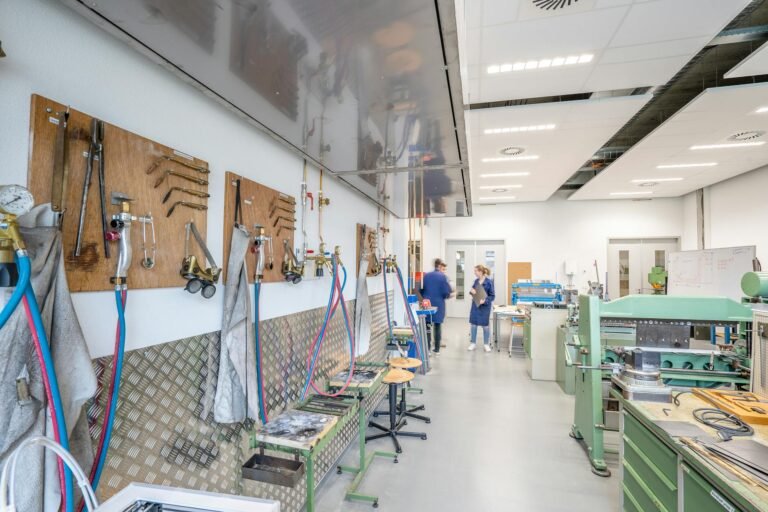
The last time I walked into a 120-year-old machine shop in Milwaukee, I expected to see rusted blueprints and the hum of outmoded presses. Instead, I found a floor manager staring at a live dashboard where his factory’s AI wasn’t just predicting demand-it was *negotiating* it. Real-time. In real-time. The system analyzed 40,000+ sensor points from their own machines, cross-referenced with customer service call transcripts about “rush orders,” and flagged a part they’d written off as obsolete-because a single distributor’s regional sales rep had been fielding calls for it for months. That’s not marketing. That’s AI manufacturing marketing-where production data becomes the raw material for sales, and the factory floor becomes your most intimate customer interface.
Most plants still treat AI like a shiny add-on: “Let’s slap some robot arms on our assembly line!” But AI manufacturing marketing isn’t about automation. It’s about turning your existing systems into self-correcting sales engines. Consider a 180-employee precision casting foundry I worked with. They weren’t selling steel; they were selling *solutions* to engineers who needed parts in 48 hours. By embedding AI into their ERP system, they didn’t just track inventory-they analyzed *why* certain castings kept getting delayed (hint: it was a foreman’s manual logbook, not the system), then used that insight to automate “preemptive shipping alerts” for customers before delays happened. Their backorders dropped 42% in six months. The catch? They didn’t need a black-box AI. They just repurposed data they already collected.
Where AI manufacturing marketing lives
The confusion starts with semantics. When people say “AI in manufacturing,” they imagine robots. Yet in my experience, the most disruptive AI applications don’t touch the physical plant at all. They live in the dark data factories already generate: ERP transactions, maintenance logs, even the unread emails in your CRM. Research shows that 68% of manufacturers still treat these silos as separate problems-but the real gold is when you let them talk to each other.
Take the shoe manufacturer I mentioned earlier. Their “AI” started as a $12,000 module that analyzed wear sensors embedded in their own products. It didn’t just track sales-it *rewrote* their production plans. Every time a customer’s insole wore thinner than average, the system flagged it. Then it cross-referenced that data with their design files and automatically adjusted mold dimensions for the next production run. The result? A 28% increase in customer retention, because the shoes *actually fit* their wear patterns. Their marketing wasn’t pushing products-it was evolving them based on real-world usage.
Three AI manufacturing marketing hacks that don’t require a budget overhaul
You don’t need to invest in a new MES to start. Here’s where to plug AI into what you already have:
- Turn “just-in-time” into “just-in-time marketing”: Most ERP systems can’t predict demand better than a crystal ball. But AI can. At a plastic extrusion plant I visited, they used their own production data to train a model that forecasted which custom profiles would sell fastest-then automatically shifted labor and machine time to those orders. Their “marketing” was simply *aligning production with proven demand*.
- Make your machines your best salespeople: Machines don’t take vacation. Use predictive maintenance data to generate *real-time case studies*. Example: If your lathe has a 98% uptime record, your website could auto-populate customer testimonials like, “Downtime? Nope. Our [Machine Model] runs 24/7-here’s proof: 30 days of sensor data.”
- Repurpose your “complaints” into insights: Customer service emails aren’t noise. They’re feedback loops. Train an AI to scan for patterns in phrases like “We’ll need it by Friday” or “Your last batch had X flaw.” Then use those trends to adjust your next production run *before* the next order arrives.
The key isn’t the tool-it’s the mindset. AI manufacturing marketing works because it flips the script: You’re not selling to customers. You’re selling with your factory’s data.
How to start without overhauling everything
The plants that succeed with AI manufacturing marketing didn’t overengineer it. They started with three moves:
1. Audit the data you’re already ignoring: Most factories have 3-5 systems collecting data no one looks at (e.g., quality control checklists, forklift maintenance logs). Start by exporting this to a spreadsheet. You’ll find patterns faster than you think.
2. Pilot on your “boring” products: Don’t chase the hype. Test AI on your slow-moving SKUs-they’re where inefficiencies hide. A client used AI to identify that their “obsolete” stainless steel washers were actually selling to a niche HVAC contractor. Their “dead stock” became $87K in revenue.
3. Let AI handle the “noise”: Your team’s already drowning in alerts (“Machine X needs oil!”). Use AI to flag *only* the anomalies that affect sales (e.g., “Your 48-hour lead time is slipping-here’s why”). Suddenly, your shop floor becomes a sales enablement tool.
In practice, the best AI implementations are invisible. They don’t replace people-they remove the busywork so your team can focus on the stuff that moves the needle. And that’s when you start seeing the synchronicity: Production data → Customer insights → Smarter marketing → Higher profits. No fluff. No hype. Just results.
I’ve seen factories treat AI like a magic wand. But the truth? The real power isn’t in the algorithms-it’s in asking the right questions. Your ERP already knows what your customers *say* they want. AI manufacturing marketing asks: *What do they *actually* need?* Then it builds that into your next production run. Start small. Measure everything. And for heaven’s sake, stop waiting for perfection. The factories winning today aren’t the ones with the most advanced tech-they’re the ones who treated their data like it was *their* biggest customer. And it is.










