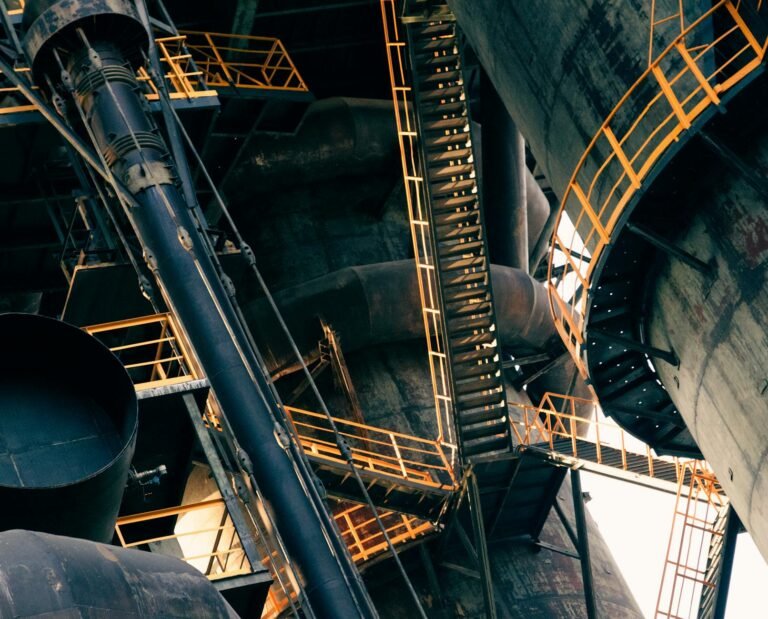
The last time I walked through a steel mill in Ohio, my boots sank into puddles of coolant while the factory floor seemed to breathe-not from steam, but from the quiet hum of Industrial AI systems embedded in every conveyor belt, press brake, and quality checkpoint. No one was talking about it in the break room. No CEO had just announced it in a town hall. Yet the data showed it: machine failures dropped 42% since they deployed predictive maintenance models. This isn’t the future from a sci-fi movie. Industrial AI is already here, but it’s not about robots taking over. It’s about turning messy, real-world operations into something smarter than the people managing them used to imagine possible.
Most people assume Industrial AI means robots dancing around warehouses or self-driving forklifts. They’re half-right. But the real magic happens when Industrial AI becomes the invisible force behind decisions that used to rely on gut feeling or outdated spreadsheets. Take ABB’s work with a European energy distributor. They weren’t replacing human operators-they were giving them a neural network trained on 15 years of grid failure patterns. When a substation in northern Sweden started showing voltage fluctuations, the system flagged it *three hours* before the transformer overheated. The operators didn’t just react-they proactively rerouted power flow, saving millions in repair costs while keeping the lights on during winter storms. That’s Industrial AI in action: not replacing people, but making them faster and more precise than any human could be.
Beyond the hype: Where Industrial AI actually saves money
The most compelling Industrial AI implementations I’ve seen aren’t flashy-they’re the ones that cut costs without anyone noticing until the quarterly report arrives. At a food processing plant in Wisconsin, they started with a simple question: *Why do our meat trimmers consistently waste 8% of every cut?* The answer turned out to be Industrial AI analyzing real-time blade vibration data against historical yield patterns. The system adjusted trim settings mid-process, reducing waste to 3.2%. Over a year, that translated to $1.2 million saved. No robots. No futuristic interfaces. Just Industrial AI doing what humans couldn’t: turning raw sensor data into actionable savings.
Three myths about Industrial AI that get in the way
Businesses chase Industrial AI solutions before addressing these three realities:
- It’s not about the algorithm-it’s about the data. I’ve seen companies spend millions on top-tier models only to discover their sensors were only capturing 60% of relevant variables. Industrial AI thrives on *complete* data, not just clean data.
- Change management is the hidden cost. At a German car parts manufacturer, operators initially resisted an Industrial AI quality control system because they thought it would make their jobs obsolete. What they didn’t realize was the system would flag 92% of defects before they reached the assembly line-freeing them to focus on process improvements.
- The system never stops learning. Most organizations treat Industrial AI as a project with a finish line. But the best implementations-like Siemens’ digital twins-continuously adapt to new equipment, supply chain fluctuations, and even human behavior patterns.
Where Industrial AI gets real: The shop floor test
In practice, Industrial AI succeeds when it solves a *specific* problem, not when it implements a *generic* solution. At a battery cell manufacturer in Texas, they faced a 12% scrap rate during the curing process. Traditional solutions involved manual adjustments and trial-and-error. Their Industrial AI approach? A real-time thermal modeling system that adjusted oven temperature gradients based on humidity levels, cell composition, and even the exact batch’s thermal history. Within six months, scrap dropped to 2.8%-and the system paid for itself in under three months. The key wasn’t the AI-it was the relentless focus on one measurable outcome.
Yet I’ve seen too many companies stumble because they skip the most critical step: proving Industrial AI works in a *real* environment before scaling. One client spent $2.4 million on a “proof of concept” that worked perfectly in simulation but failed in production because their legacy PLCs couldn’t handle the response times. Industrial AI isn’t just about buying the latest tools-it’s about embedding the technology into the *existing* workflow, not replacing it.
In my experience, the factories that truly master Industrial AI treat it like a living system-not a one-time project. They start with a single optimization (like that Ohio steel mill’s predictive maintenance), prove its value, then expand to adjacent processes. They involve operators in training the models because they know the system only works if it’s *better* than the status quo. And they accept that some predictions will be wrong-because even the best Industrial AI can’t replace human judgment.
The future of manufacturing isn’t about humans vs. machines. It’s about humans *with* machines-where Industrial AI handles the tedious, the predictable, and the data-heavy work so people can focus on what matters: innovation, safety, and making better products. The organizations that succeed won’t be the ones with the most advanced algorithms. They’ll be the ones who make Industrial AI an everyday partner-not a distant promise.