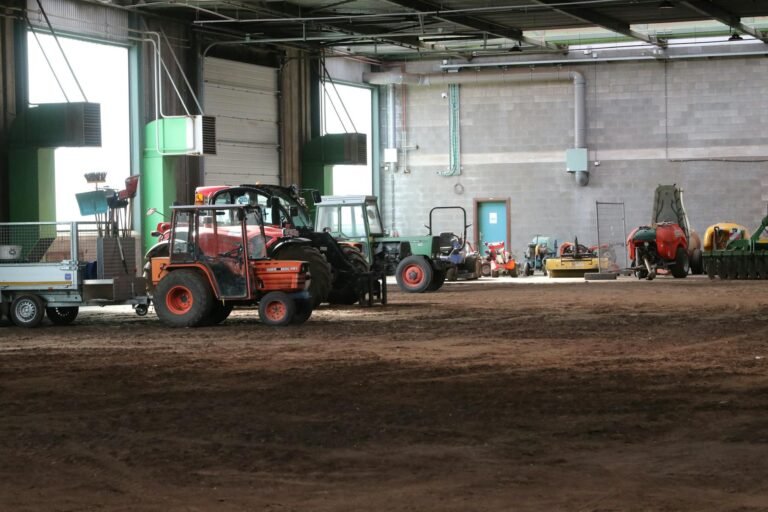
The farm machinery market isn’t just about steel and diesel-it’s about the quiet revolution happening on fields where GPS coordinates dictate harvests and sensors whisper warnings before breakdowns happen. I remember the first time I watched a farmer in Illinois remotely adjust his planter’s seed depth from a phone while standing in the middle of a cornfield. The machine responded instantly, and he just shrugged and said, “Used to be I’d have to climb up there and eyeball it.” That’s the real story behind the farm machinery market today: it’s less about raw power and more about how quickly technology can bridge the gap between tradition and survival. This year’s sales figures aren’t just numbers-they’re telling us who’s keeping pace and who’s being left behind.
Precision tools aren’t just selling-they’re reshaping how farms operate
The farm machinery market has reached a crossroads where precision agriculture isn’t optional-it’s the difference between profit and panic. Practitioners in the industry are noticing something unexpected: the 12% jump in self-propelled sprayer sales last quarter isn’t just about efficiency. It’s about farmers who can’t afford to waste a single acre when margins are tighter than ever. Take Deere & Company’s 9R Tractor Series as an example. This isn’t just another bigger tractor-it’s a system that cuts fuel use by 20% while doubling payload capacity. Farmers aren’t buying machines anymore; they’re investing in ecosystems that adapt to weather, soil conditions, and even the operator’s fatigue levels.
Yet this shift comes with a catch. The same USDA reports showing record demand for precision tools also reveal that used equipment sales dipped by 5% last year. Why? Buyers hesitate when they can’t verify whether the AI integration will still be cutting-edge in two years. Dealers are left holding inventory of tools that feel revolutionary today but may be obsolete tomorrow. It’s a paradox: innovation thrives on adoption, but adoption requires proof. And right now, that proof is harder to find than ever.
The buyers who drive this market-and why they’re split
What’s fascinating is that the farm machinery market isn’t monolithic. Contract growers, who manage land for investors, are pouring money into machinery fleets because their margins depend on squeezing every ounce of productivity out of rented acres. I’ve seen this in action at a 20,000-acre corn operation in Iowa where the owner leased a fleet of tractors to complete harvest in 60 days flat. “We’d lose money if the weather held,” he told me, “but the machines pay for themselves in downtime savings.” Yet even they’re cautious, prioritizing fuel efficiency, remote diagnostics, and resale value. Small-scale organic farmers, meanwhile, get priced out entirely-caught between legacy equipment that’s becoming obsolete and premium tools they can’t afford.
The divide is becoming starker. While agribusinesses splurge on autonomous header attachments costing more than a luxury SUV, organic growers (who make up 4% of operations but 20% of market growth) trade in used skid steers and hand-held sensors. The farm machinery market is growing, but it’s growing in two directions at once-and not everyone can keep up.
Where the real challenges lurk
The farm machinery market’s growth is being held back by two stubborn problems: supply chain lingering effects and regional economic pressures. The semiconductor shortage that paralyzed tractor production last year may have eased, but it hasn’t disappeared entirely. Meanwhile, in states like California and Florida, land prices have surged by 25%, forcing farmers to prioritize mortgage payments over new equipment. Dealers aren’t panicking yet, but they’re watching closely.
Then there’s the human factor. Tractor dealers report that 40% of their tech support requests stem from operators who weren’t trained on the software features of their new machines. One Nebraska dealer shared how he had to send a trainer to a farm mid-season to teach a crew how to use auto-steer. “It’s not just about buying the gadget,” he said. “It’s about the people who’ll operate it-and right now, that’s the weak link.” This isn’t just a hardware problem; it’s a human one.
Three overlooked opportunities in the farm machinery market
If you’re navigating this market, focus on these often overlooked opportunities:
- Pre-loved precision tools-Used equipment retains 70% of its value if well-maintained, and platforms like TractorTalk are making it easier to buy secondhand machinery with warranties.
- Custom attachments-Aftermarket parts for specialized tools (like cherry pickers for orchards) are booming, offering modular setups that pay for themselves in a single season.
- Flexible financing-Leasing programs are expanding, particularly for smaller operations. A Wisconsin dairy farm recently leased a combine instead of buying it, saving 30% upfront and avoiding resale hassles.
Yet even these solutions come with trade-offs. A friend of mine leased a self-leveling planter but was saddled with a clause requiring him to use the lessor’s branded seeds. “It’s like getting a phone lease and being told you have to use Verizon,” he complained. The market’s evolving, but not fast enough to suit everyone-and that’s the real challenge.
The farm machinery market today is a tale of two worlds. On one side, farmers who can afford to gamble on innovation are reshaping agriculture with technology that was once science fiction. On the other, those who can’t afford the leap are holding onto tools that feel increasingly outdated. What’s clear is that the equipment isn’t just selling itself-it’s selling a promise, and that promise is becoming harder to keep. The question isn’t whether precision tools will dominate the market, but whether every farmer can afford to board that train before it leaves the station.