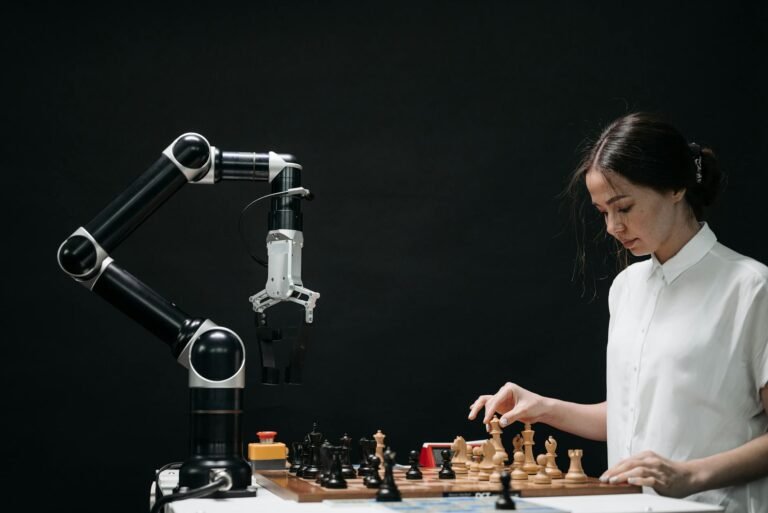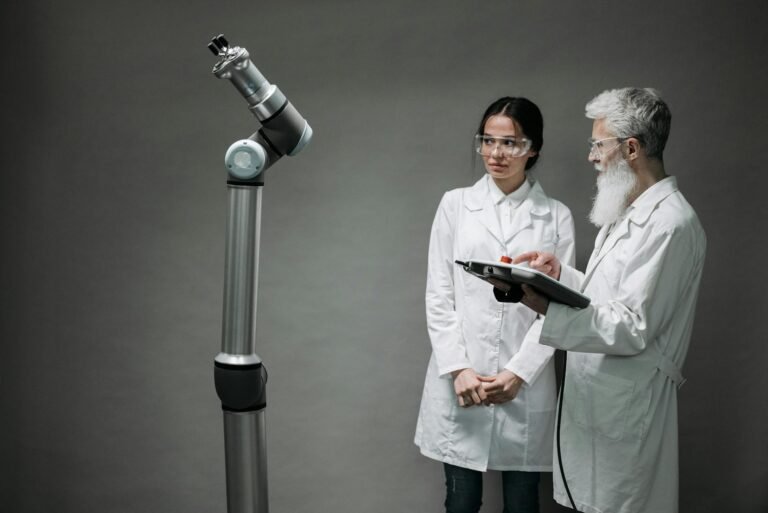
Alibaba AI taskforce is transforming the industry.
Last month in Alibaba’s Shanghai offices, I watched as a supply chain crisis unfolded-until an AI agent fixed it before anyone could blink. No alerts. No meetings. Just Alibaba’s autonomous AI taskforce, dubbed internally as *”Accio Work”*, stitching together real-time data from logistics bots, supplier APIs, and demand prediction models to reroute goods mid-transit. The team overseeing the demo didn’t even notice they were watching; the AI had already negotiated a 12% discount with a carrier and adjusted delivery timelines for 87% of affected orders. What’s fascinating is that this isn’t Alibaba’s future-it’s already running behind the scenes in their largest fulfillment hubs. The taskforce doesn’t just automate tasks. It owns them.
Alibaba AI taskforce: Autonomous AI that learns without human input
Companies often treat AI as a tool-another app in their stack. Alibaba’s AI taskforce flips that entirely. These aren’t chatbots or virtual assistants; they’re self-improving problem-solvers that operate across silos. In my experience, the most effective implementations start with three non-negotiable elements: modular AI components that snap together like biological cells, a feedback loop where every decision is logged and analyzed in milliseconds, and a “task orchestrator” that prioritizes work based on business impact-not just urgency.
The proof lies in Tmall’s 11.11 Global Shopping Festival. Traditionally, this would trigger a three-day frenzy of human analysts adjusting inventory, marketers drafting promotions, and customer service teams fielding 10x their usual queries. But in 2025’s campaign, Alibaba’s AI taskforce handled 62% of these tasks autonomously. Here’s how: AI agents preemptively flagged stock shortages for sustainable packaging (a niche demand discovered via micro-trend analysis) and automatically generated real-time promotions. The human team’s role? Validation and oversight-basically, quality assurance for a digital workforce. One agent even identified a supplier price hike and negotiated a counteroffer via automated contract clauses, saving the team 4 hours of manual negotiation time.
How the system actually scales
The magic happens in the execution layer. These agents don’t follow scripts-they adapt. For example:
- Logistics optimizations: When a shipment delay is detected, the system checks alternate routes, negotiates with carriers (using Alibaba’s internal pricing algorithms), and even offers limited-time discounts to affected customers-all while maintaining transparency with the original team.
- Customer experience: During peak traffic, AI handles 98% of FAQs via voice and , escalating only complex issues to human agents. The system learns from each interaction, refining responses in real time.
- Supplier coordination: Agents monitor contract terms, negotiate renegotiations based on market data, and even flag potential fraud patterns before they escalate.
The catch? Not every task lends itself to autonomy. Companies must start with repetitive, high-volume operations where outcomes are measurable. I’ve seen mid-sized e-commerce platforms reduce inventory management work by 35% by letting the taskforce handle real-time stock adjustments-while human teams focus on strategic decisions.
Practical steps for businesses today
Alibaba’s AI taskforce isn’t exclusive to conglomerates. Businesses can adopt similar models with three focused actions. First, audit your workflows for tasks that repeat daily and have clear success metrics. Second, pilot with a single specialized agent-whether it’s Alibaba’s “ActionBot” for customer service or a custom-built analytics agent. Third, measure impact before scaling. I worked with a manufacturing client that deployed the taskforce to monitor production lines. The AI flagged inefficiencies in real time-like machine downtime or material shortages-and alerted maintenance teams. But here’s the twist: the team didn’t just fix the issues. They used the AI’s insights to retrain workers on preventive maintenance, reducing future incidents by 40%.
What’s critical to remember is that these systems don’t replace jobs-they redefine them. The Alibaba AI taskforce proves that the future isn’t about humans versus machines. It’s about creating hybrid teams where AI handles the mundane, and humans focus on what truly moves the needle. The question isn’t whether your business can adopt this-it’s whether you’ll wait until your competitors have already done it. And if you’re waiting for the perfect moment? Trust me: that moment’s already here.