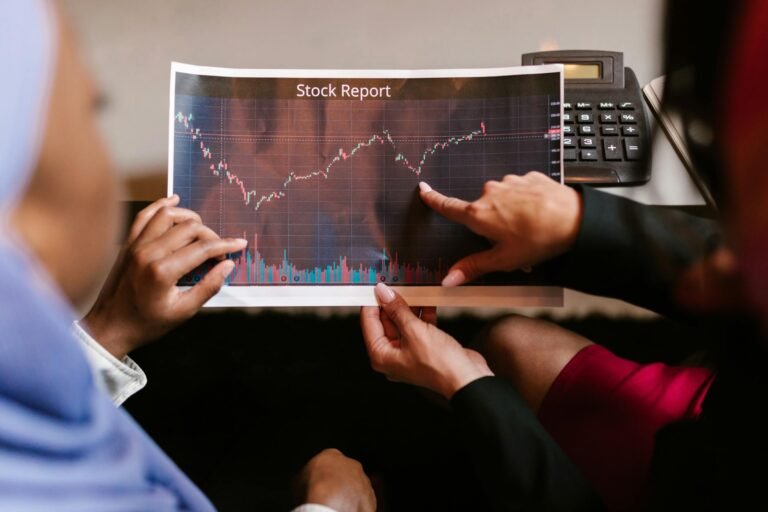
Last week, the S&P 500 dropped 5% in two days-again. Not the first time this year, not the last. Investors are staring at their screens, waiting for the next shoe to drop, and the market’s reaction isn’t just nervousness. It’s outright confusion. I remember sitting in a trading room in 2022 when the 10-year Treasury yield spiked 50 basis points in a single session. The whole floor erupted. Some traders cheered, others stormed out. The difference? One group saw the Fed’s move as a sign of strength; the other saw the writing on the wall. That’s the stock market turbulence we’re living through now-where every headline feels like a new cycle begins. The question isn’t *if* this continues, but what it means for your portfolio.
stock market turbulence: Why the Fed’s rate policy is the spark
The Federal Reserve isn’t just adjusting rates-it’s redefining the rules of the game. Their recent hint of slower rate cuts, after months of aggressive hikes, sent shockwaves through markets. Consider the case of Caterpillar, which saw its stock plunge 12% after guidance missed by just 0.2%. Yet the real damage came from investors re-evaluating the entire industrial sector’s exposure to higher borrowing costs. The turbulence here isn’t about Caterpillar-it’s about the psychology of cost. When the Fed signals it’s done with emergency measures, companies that bet big on cheap debt now face reckoning.
Who’s getting crushed entroulately
The market’s turbulence has a target list, and it’s not what most headlines suggest. Sure, tech stocks get attention, but the real casualties are hiding in plain sight:
- High-yield bonds-where 30% of issuers now trade at yields above 9%. Yet default rates are rising as margins compress.
- Commercial real estate-office vacancies in NYC hit 14% last quarter. The “last-in, first-out” rule applies to every landlord.
- Unprofitable “growth” stocks-take Rivian. Trading at 30% of its peak valuation, but its “future potential” narrative just lost credibility.
I’ve seen this before: markets don’t just punish bad decisions-they expose them. Right now, every company with a balance sheet built for 2% rates is being tested. The turbulence isn’t random. It’s methodical.
What investors should actually fear
Businesses aren’t just watching the Fed-they’re bracing for the unknown variables. The Red Sea crisis? Shipping costs surged 40% overnight, but the damage went beyond logistics. It reminded everyone that global supply chains are still one crisis away from collapse. Meanwhile, Congress’s inability to pass a budget means fiscal policy remains a wild card. In my experience, markets hate uncertainty more than bad news. Right now, they’re getting both.
The turbulence we’re seeing isn’t just about numbers-it’s about confidence. When was the last time you heard a CFO confidently predict 2025 earnings? Probably not. That’s the real risk: a market where no one knows what “normal” looks like anymore.
How to survive the storm
First, stop reacting to headlines. The market’s turbulence creates noise, but the signal is always in the fundamentals. Consider 3M-trading at a 15-year low but with $12B in free cash flow. Or AT&T, which has paid $22B in dividends since 2010. These aren’t flashy growth stocks; they’re steady operators in a chaotic environment.
Second, diversify beyond the obvious. Too many portfolios are overloaded with “safe” tech or “recession-proof” utilities. Instead, look for undervalued infrastructure or dividend aristocrats with 25+ year track records. These assets don’t move with the crowd-and that’s exactly why they survive the turbulence.
The turbulence isn’t a bug-it’s the feature. Markets don’t stay volatile forever. But the ones who thrive are the ones who stay patient.