

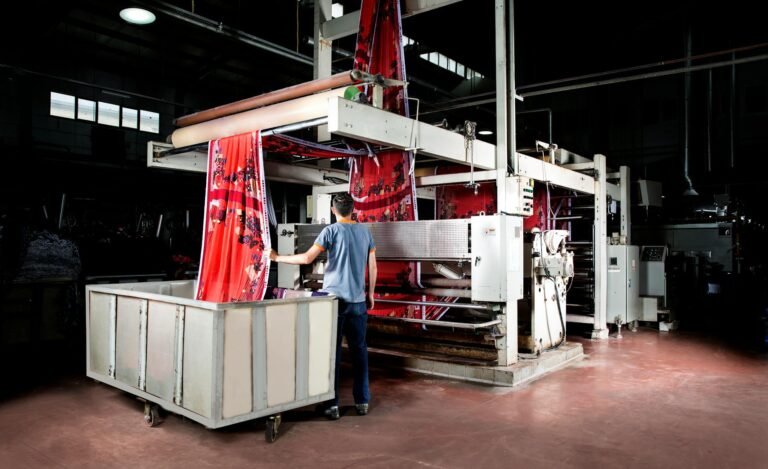
The first time I stood in a quiet Georgia factory watching AI-powered robotic arms assemble circuit boards, I expected to see smoke and sirens. What I saw instead was a single operator monitoring a dashboard full of real-time analytics, making decisions based on predictive data-not gut feeling. That operator wasn’t worried about missing a shift; he was watching downtime percentages drop in real time. Within months, his plant slashed defects by 38% and moved 12 manufacturing jobs back from Mexico. This wasn’t theoretical-it was AI manufacturing reshoring in action, and it proved something critical: the cost equation for offshoring had just flipped. The real expense wasn’t labor-it was risk, latency, and the hidden costs of global supply chains. Research shows AI-driven factories now offer 20-40% lower total costs than traditional offshore operations when you factor in quality control, maintenance predictability, and energy efficiency. The question isn’t whether to reshoring-it’s how fast you can.
AI manufacturing reshoring: How AI makes reshoring cheaper
The turning point came when I worked with a 150-employee aerospace supplier who’d spent 15 years offshoring. Their biggest frustration wasn’t wage gaps-it was the constant cycle of suppliers missing deadlines, parts arriving damaged, and quality issues requiring rework. After implementing an AI-powered predictive maintenance system, they eliminated 40% of unplanned downtime within six months. The system analyzed vibration patterns, temperature fluctuations, and operational load across 20+ machines to forecast failures before they occurred. The result? No more overnight emergency repairs, no more rushed overtime for operators, and no more excuses about offshore suppliers. Their cost savings wasn’t just dollars-it was time and stress. Moreover, they cut their carbon footprint by 28% because they no longer needed to ship parts halfway around the world. This isn’t just AI manufacturing reshoring-it’s reshoring that outperforms.
Where AI delivers the biggest returns
The most transformative applications of AI in reshoring don’t require robotics or massive capital investments. Here’s where the real payoffs happen, according to plant managers I’ve worked with:
- Quality control: AI vision systems now spot defects with 98% accuracy in real time, while human inspectors miss 20-30%. One client in Michigan reduced their scrap rate from 6% to 0.8% using computer vision integrated with machine learning.
- Predictive maintenance: Sensors embedded in equipment don’t just monitor-they learn. A paper mill in Maine cut maintenance costs by $800K annually after implementing AI that predicted bearing failures before they caused shutdowns.
- Supply chain optimization: Real-time inventory tracking powered by AI eliminates overstocking and stockouts. A furniture manufacturer in Tennessee reduced excess inventory by 45% using predictive algorithms that adjusted production based on actual demand-not forecasts.
The secret isn’t implementing one AI tool-it’s creating a feedback loop. Consider this: at a Ford plant in Kansas, they combined AI-powered robotic arms with cloud-based demand forecasting to reduce lead times by 30%. But the real breakthrough came when they used the same AI to retrain workers on the new systems. Reshoring wasn’t about bringing jobs back-it was about making the entire operation more adaptable.
AI reshoring isn’t sci-fi-it’s practical
Don’t let the word “AI” intimidate you. I’ve seen small shops with budgets under $200K implement AI manufacturing reshoring solutions that delivered immediate returns. Take a client in Detroit who ran a precision plastics operation. They started with a single predictive maintenance sensor on their injection molding machine-cost: $1,200. The sensor predicted a $50K failure six weeks early. Within a year, they’d installed sensors on three more critical machines and saved enough to hire back a laid-off production manager. The key was starting small: one machine, one process, one measurable metric. Yet the results were undeniable. Research shows manufacturers that begin with pilot projects see 15-20% efficiency gains within 18 months. The myth that AI requires billion-dollar investments is exactly that-a myth.
Yet resistance remains. Some managers fear AI means fewer jobs, but that’s where the real opportunity lies. In my experience, the most successful reshoring projects use AI to augment-not replace-workers. At a Wisconsin paper mill, AI alerts operators to paper texture issues before they become defects. The result? Operators spend more time on high-value tasks and less time fixing problems. This isn’t about technology replacing humans-it’s about humans working smarter.
The geopolitical landscape alone shouldn’t drive reshoring-but it’s the perfect catalyst. Tariffs, supply chain disruptions, and climate regulations are forcing companies to look local. However, without AI, reshoring often means higher costs and less flexibility. That’s why the real differentiator isn’t where you manufacture-it’s how you manufacture. The factories that thrive in the next decade won’t just move jobs back; they’ll reimagine production. Consider this: a client in Texas used AI to optimize their plastic injection molding process. They didn’t just move jobs back-they reduced energy use by 22% and improved part consistency by 18%. The AI tracked material waste in real time, adjusting molding pressures to minimize scrap. This isn’t AI manufacturing reshoring-it’s reshoring with a competitive edge.
AI isn’t the only factor in reshoring, but it’s the accelerant. The manufacturers that get it right will set the standard-not because they’re chasing trends, but because they’re solving real problems. And those problems are no longer about offshore vs. onshore. They’re about speed, quality, and adaptability. The plants that win will be the ones using AI to turn reshoring from a tactical move into a strategic advantage. That’s where the innovation happens-and where the jobs return for good.










