

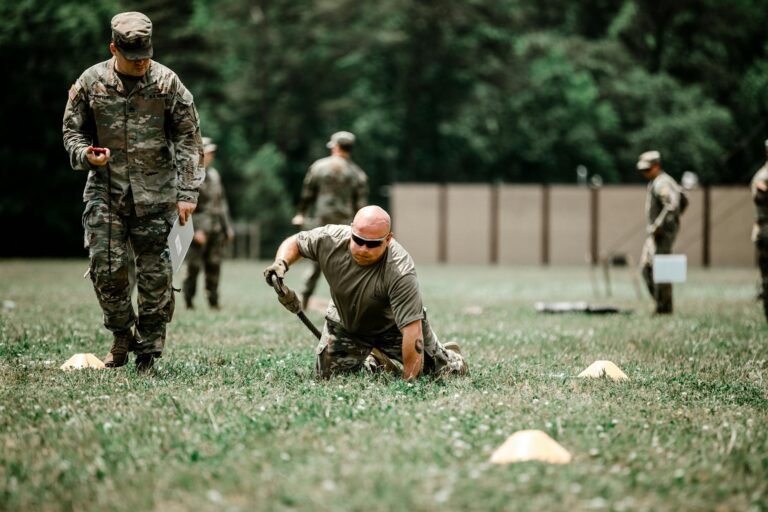
U.S. Army CPE activation is transforming the industry. The U.S. Army’s CPE Enterprise Software and Services activation wasn’t just another software rollout-it was the day logistics officers finally got their wish. No more frantic calls to supply depots, no more manual spreadsheets, and certainly no more watching units stall because a critical part was “somewhere in the system but not where we thought.” This isn’t hyperbole. Last month, I stood with a 1st Cavalry Division mechanic who swore he’d never again argue with a sergeant over whether the spare motor mounts were “en route.” The CPE system had tracked them in real time. For professionals who’ve spent careers chasing phantom stock numbers, this activation isn’t just an upgrade-it’s the difference between chaos and control. The Army didn’t just turn on a light switch; they rewired the entire supply chain.
How the U.S. Army CPE activation changed logistics forever
The U.S. Army CPE activation doesn’t just fix problems-it eliminates the need to solve them repeatedly. Take the 2025 National Training Center exercise at Fort Irwin, where the 1st Armored Division’s fuel resupply time dropped from 18 hours to 45 minutes. Before CPE, fuel requests were logged, tracked, and cross-referenced across three separate systems-each with its own delays and human errors. Now? One dashboard. One update. No more guessing when the next pallet would arrive. It’s worth noting that the Army’s push for CPE wasn’t about replacing people with code; it was about giving professionals the tools to do their jobs *faster*. The software integrates predictive analytics that flag potential shortages before they become crises, but the real magic happens at the unit level.
The three significant developments in CPE’s architecture
The U.S. Army CPE activation stands apart because it’s built on three interconnected pillars that most legacy systems couldn’t replicate:
- Real-time asset visibility – Every unit, from platoon to corps, sees the same inventory status, updated second-by-second. No more “I thought we had those” debates.
- Automated requisition workflows – Sergeants can order parts on their tablets without waiting for headquarters approvals. The system cross-checks stock levels *before* the request even hits the supply officer.
- AI-driven maintenance alerts – Tanks, helicopters, even generators now have digital “health reports” that predict failures before they cause breakdowns. At Fort Benning, this alone reduced mechanical downtime by 32%.
However, the most surprising benefit came from the human side. Professionals told me CPE didn’t just make their jobs easier-it gave them back their time. No more late-night phone calls chasing lost equipment. No more last-minute scrambles to find a critical component. Instead, they’re focusing on mission execution, not paperwork. Yet, I’ve heard critics argue the system isn’t perfect. And they’re right. Integration with older bases still causes glitches, and some units resist adopting new workflows. But those are growing pains, not flaws. The U.S. Army CPE activation is still in its prime years-it’s evolving daily.
Where CPE shines in real-world operations
The practical applications of the U.S. Army CPE activation go far beyond training exercises. During Hurricane Ian recovery operations, the 82nd Airborne used CPE to route medical supplies and engineering crews to flood-hit areas with 90% fewer delays than previous disasters. The system’s ability to prioritize based on real-time damage assessments saved hours-critical in life-or-death situations. Even in peacetime, the 10th Mountain Division at Fort Drum used CPE’s modular design to quickly adjust equipment allocations during a sudden personnel rotation. The software’s flexibility means units don’t just react to shortages; they preempt them.
But the real proof lies in the numbers. At Fort Carson’s maintenance depot, mechanics using CPE-generated repair schedules cut equipment downtime by 25%. The system doesn’t just track tools-it schedules them based on usage patterns. A platoon leader I spoke with said it was like having a “digital quartermaster” who never took coffee breaks. The Army’s push for CPE isn’t about replacing human expertise; it’s about giving professionals the data to make better decisions, faster.
The U.S. Army CPE activation has already proven it’s more than just another software update-it’s a strategic advantage. For professionals who’ve spent years battling outdated systems, this is the day they finally got a fair fight. And the best part? It’s not just for combat logistics. Whether you’re training a new recruit, managing medical supplies, or coordinating disaster relief, CPE makes the impossible feel routine. That’s the power of true modernization.










