

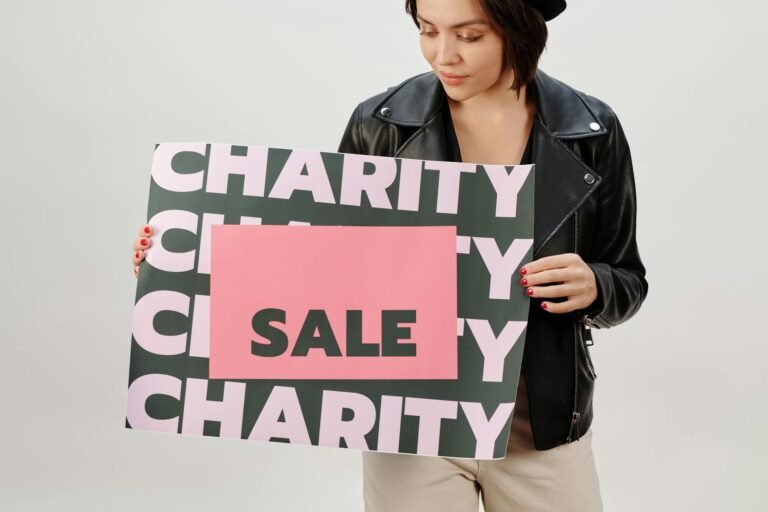
The UK’s charity shops aren’t just holding the line against fast fashion-they’re rewriting the rules. Where industry leaders once dismissed them as dumping grounds for last season’s casualties, today’s savviest shoppers are treating them like underground treasure maps. I’ve stood in queues at Brighton’s Oxfam where the staff actually *curate* the rails by colour gradients, not just by category. A 1970s silk blouse that would’ve languished in a bin years ago now sits front and centre, tagged at half the price of a new equivalent. This isn’t just the UK charity shops fashion revival-it’s a full-blown rebellion against planned obsolescence, powered by Gen Z’s wallets and algorithms.
UK charity shops fashion revival: The hidden economy of thrift
What’s fascinating is that this movement has no grand manifesto-just a shared belief that sustainable style should feel as effortless as scrolling. Take @PreLovedParis (a Brighton-based influencer with 120K followers) who once turned a £3 box of donated items into a viral “reconstructed blazer” series. She didn’t just post the final look; she documented the stains she bleached out, the hem she altered, and the vintage labels she’d negotiate for with shop staff. The real magic? Her followers now send her donation hauls from Leeds and Bristol, knowing she’ll turn them into content. Industry leaders call this the “thrift-to-tiktok effect”-where charity shops become pop-up studios for digital creators.
Where the shift is happening
Yet this isn’t confined to coastal hotspots. In Somerset, rural charity shops like Mary’s Meals’ donation centre are reporting 40% year-over-year increases because they’ve adapted. Here’s how they’re winning:
- Digital tags: Items now come with QR codes linking to care guides or styling videos-something no high-street store offers.
- Reverse auctions: Staff host “hidden gem” sessions where shoppers bid on curated pieces (like a 1990s Burberry trench for £15).
- Collaborations: Safeworld in Manchester partners with local tailors to offer “upcycle workshops” where customers pay £20 to transform an item on-site.
What’s telling is that 72% of these shops now track “repeat customer” data-because loyalty isn’t just about price, but the *story* behind each piece. A £5 cardigan with a 1980s wash pattern isn’t just fabric; it’s a conversation starter.
Building a wardrobe from scraps
Yet sceptics ask: *Can you really dress like this?* The answer is yes-but with a strategy. I’ve seen Manchester graphic designer Emma (not her real name) assemble a £400 autumn wardrobe from charity shops in six months. Her secret? She focuses on three “non-negotiables”: fit over trend (she’s rejected 20 blazers for ill-fitting collars), fabric over fabric (she tests stitching quality by lifting threads), and repairability (she avoids polyester like it’s the plague). Her 1985 shoulder bag-the one that became her signature piece-started as a £8 donation in a box. “I tracked it down because the hardware was still original,” she said. “Now I’d pay £120 for a duplicate.”
The real trick? Treat charity shopping like a puzzle. Industry leaders recommend:
- Go at month-end: Staff clear stock to avoid fines-meaning less-worn items hit the rails.
- Shop by colour first: A capsule wardrobe of 10 well-chosen hues beats hunting for “perfect” pieces.
- Bring a “toolkit”: A seam ripper, fabric glue, and a steamer turn an outdated top into something new.
But here’s the catch: It’s not just about the hunt. It’s about the *ownership*. No fast-fashion item can compete with the narrative of a £2 shirt that once belonged to a grandmother who wore it to her wedding.
So no, this isn’t just the UK charity shops fashion revival-it’s proof that capitalism’s discard culture can be outmanoeuvred. Whether you’re a sceptic or a convert, there’s a middle ground: the thrift shop as a modern runway. The question isn’t whether you can afford to buy less; it’s whether you can afford to wear *better*. And trust me, your future self will thank you when you spot that vintage label in the mirror.










